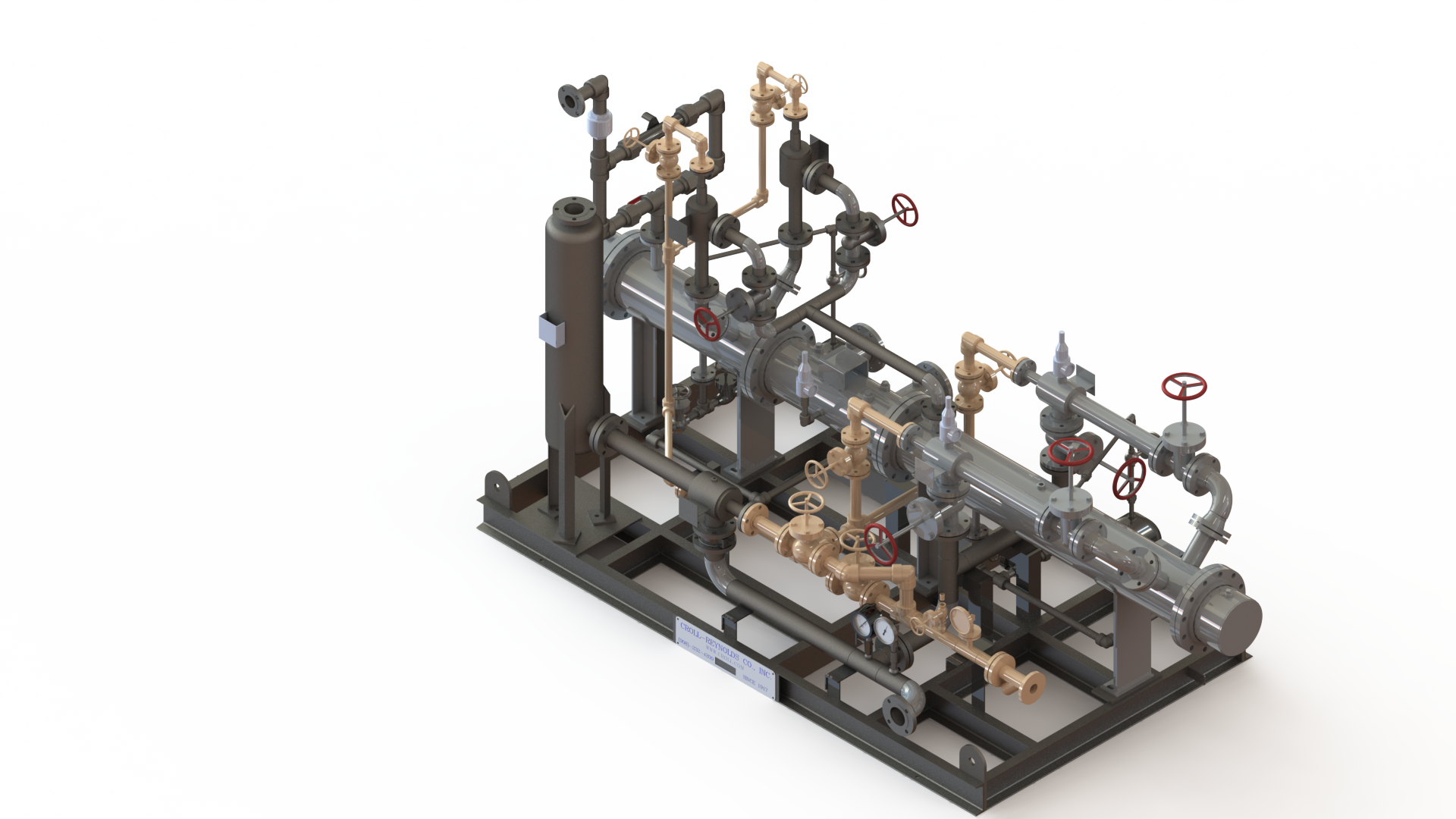
In modern process industries, managing large volumes of gases and vapors under vacuum conditions is critical for efficiency, safety, and product quality. Steam Jet Ejector Vacuum Systems have become a preferred solution for such demanding applications due to their simplicity and robustness. Companies like Croll Reynolds have been at the forefront of designing these systems to meet the evolving needs of industries such as chemical processing, oil refining, and power generation. Their ability to operate continuously, handle challenging process streams, and deliver reliable performance makes them an essential part of industrial vacuum technology.
The Principle behind High-Volume Handling
The efficiency of steam jet ejector systems lies in their fundamental working principle, which is based on the relationship between velocity and pressure. High-pressure steam is expanded through a specially designed nozzle, converting pressure energy into high kinetic energy. This creates a high-velocity jet that generates a low-pressure zone, enabling the system to draw in large volumes of gas or vapor from the connected process. This mechanism allows the system to handle massive flow rates without relying on mechanical components. The absence of moving parts eliminates bottlenecks and mechanical limitations, making it particularly effective for continuous, high-capacity operations. As a result, industries dealing with large-scale vapor generation can rely on this technology for uninterrupted performance.
Continuous Flow without Mechanical Constraints
One of the key reasons these systems efficiently handle large volumes is their non-mechanical nature. Unlike traditional vacuum pumps that rely on rotating parts, ejector systems operate entirely on fluid dynamics. This allows them to maintain a steady and continuous flow of gases and vapors without the risk of mechanical wear or performance degradation over time. Because there are no internal moving components, the system can process fluctuating loads and sudden surges in vapor volume without failure. This makes it highly suitable for industries where process conditions are not always stable, such as distillation, evaporation, and drying operations.
Multi-Stage Design for Enhanced Capacity
To manage extremely large volumes and achieve deeper vacuum levels, steam jet ejector systems are often designed with multiple stages. Each stage progressively compresses the gas stream, allowing the system to handle higher loads while maintaining efficiency. Between these stages, condensers are strategically placed to remove condensable vapors. By reducing the volume of vapor that moves to the next stage, the system minimizes the load on subsequent ejectors. This staged approach ensures that even very high flow rates can be managed effectively without excessive energy consumption.
Role of Condensers in Volume Reduction
Condensers play a crucial role in improving the efficiency of these systems. As the steam and entrained vapors pass through the system, condensers remove heat and convert a portion of the vapor into liquid. This significantly reduces the total volume of gas that needs to be handled in the next stage. By lowering the vapor load, condensers enhance the overall efficiency of the system and allow it to process larger volumes without requiring additional energy input. This not only improves performance but also reduces operational costs, making the system more economical in the long run.
Efficient Handling of Mixed and Contaminated Streams
Industrial processes often generate gas streams that are not clean or uniform. These streams may contain moisture, particulates, or condensable vapors, which can pose challenges for mechanical vacuum systems. Steam jet ejector systems excel in such environments because they are inherently resistant to contamination.
The system’s design allows it to handle wet, dirty, or corrosive gases without clogging or damage. This capability ensures consistent performance even when processing complex mixtures. As a result, industries dealing with harsh or variable process conditions can rely on these systems for efficient gas handling.
Energy Conversion and Momentum Transfer
Another important factor contributing to high-volume handling is the efficient transfer of energy within the system. The high-velocity steam jet transfers its momentum to the incoming gas stream, effectively entraining and accelerating it through the system. As the mixed stream passes through the diffuser, its velocity decreases while pressure increases, enabling it to move to the next stage or discharge point. This continuous conversion between velocity and pressure ensures that large volumes of gas are moved efficiently without energy loss.
Reliability in High-Demand Industrial Environments
Handling large volumes of gas and vapor requires not only efficiency but also reliability. Steam jet ejector systems are known for their durability and ability to operate under extreme conditions. Their simple construction reduces the likelihood of failure, even in demanding environments. These systems can operate continuously for long periods with minimal maintenance, making them ideal for industries where downtime is costly. Their robust design ensures consistent performance, even when exposed to high temperatures, corrosive substances, or fluctuating process loads.
Adaptability across Industrial Applications
The versatility of steam jet ejector systems allows them to be used across a wide range of industries. Whether it is removing non-condensable gases in power plants, supporting distillation processes in chemical industries, or enabling evaporation in food processing, these systems adapt easily to different requirements. Their ability to handle large volumes efficiently makes them particularly valuable in processes where maintaining vacuum conditions is essential for product quality and operational efficiency. This adaptability further enhances their appeal as a reliable vacuum solution.
Conclusion
In conclusion, Steam Jet Ejector Vacuum Systems provide an efficient and reliable solution for handling large volumes of gas and vapor in industrial applications. Their unique working principle, combined with multi-stage design, effective condensation, and robust construction, allows them to outperform many conventional vacuum technologies. With industry leaders like Croll Reynolds continuing to innovate and optimize these systems, they remain a vital component in modern process industries where performance, reliability, and efficiency are paramount.